

Technical workshops in La Paz and Beni mark the start of the trinational project, with actions that will benefit at least 1,200 producers in Bolivia.
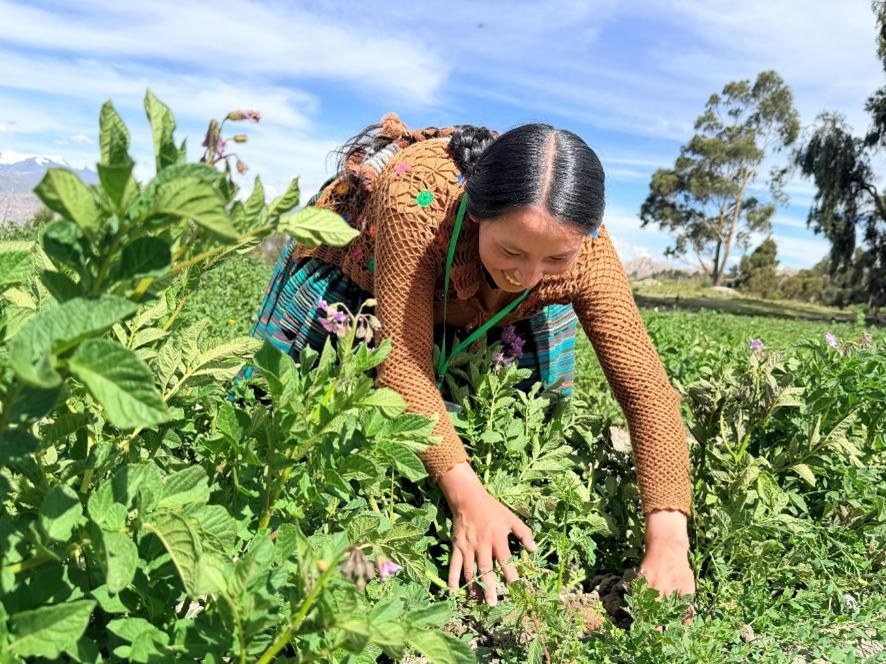
Between December 8 and 14, technical workshops on participatory genetic improvement and evolutionary plant breeding were held in the departments of La Paz and Beni. The activities brought together approximately 167 producers from 19 rural communities, with a significant participation of women (47%), reaffirming their central role in seed conservation, local knowledge, and food production.
This initiative is part of the trinational project “Participatory Improvement of Genetic Resources and Seed Systems for Agroecological Production – Agroecological Roots”, part of the Global Programme for Small Farmers and Sustainable Transformation of Food Systems (GP-SAEP).
It is financed by the European Union through the United Nations International Fund for Agricultural Development (FIDA), implemented by the Inter-American Institute for Cooperation on Agriculture (IICA) and with technical leadership from the Brazilian Agricultural Research Company (EMBRAPA) at the trinational level.
In Bolivia, implementation is the responsibility of the National Institute of Agricultural and Forestry Innovation (INIAF), together with the consortium made up of the Foundation for the Promotion and Research of Andean Products (PROINPA) and the Center for Research and Promotion of the Peasantry (CIPCA).
Participatory improvement workshops are strategic because they are key methodologies that allow communities to select and develop seeds adapted to their territories: “We want to learn, improve our crops, and produce better. Our income depends on what we produce. We want to grow and stop using chemicals,” the communities emphasize.
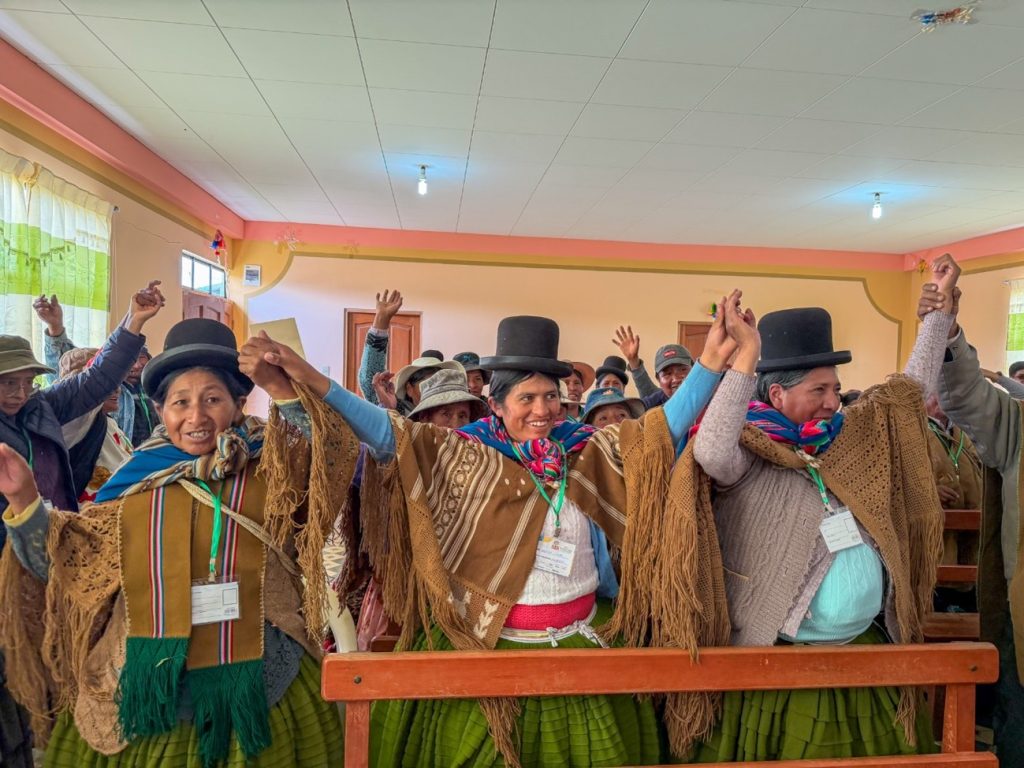
The activities were attended by municipal authorities, producers, IFAD specialist in Evolutionary Plant Breeding (EPB), technicians from PROINPA and CIPCA, representatives from IICA Bolivia and the Project Management Unit (UGP) team.
Local authorities recognized the importance of the project for local development, highlighting the importance of learning and innovating to produce better and expand local marketing, one of the communities' major interests.
Specialist Humberto Ríos (FIDA) highlighted that "the producers themselves will select the seeds, ensuring that the results respond to the real needs of the territories.".
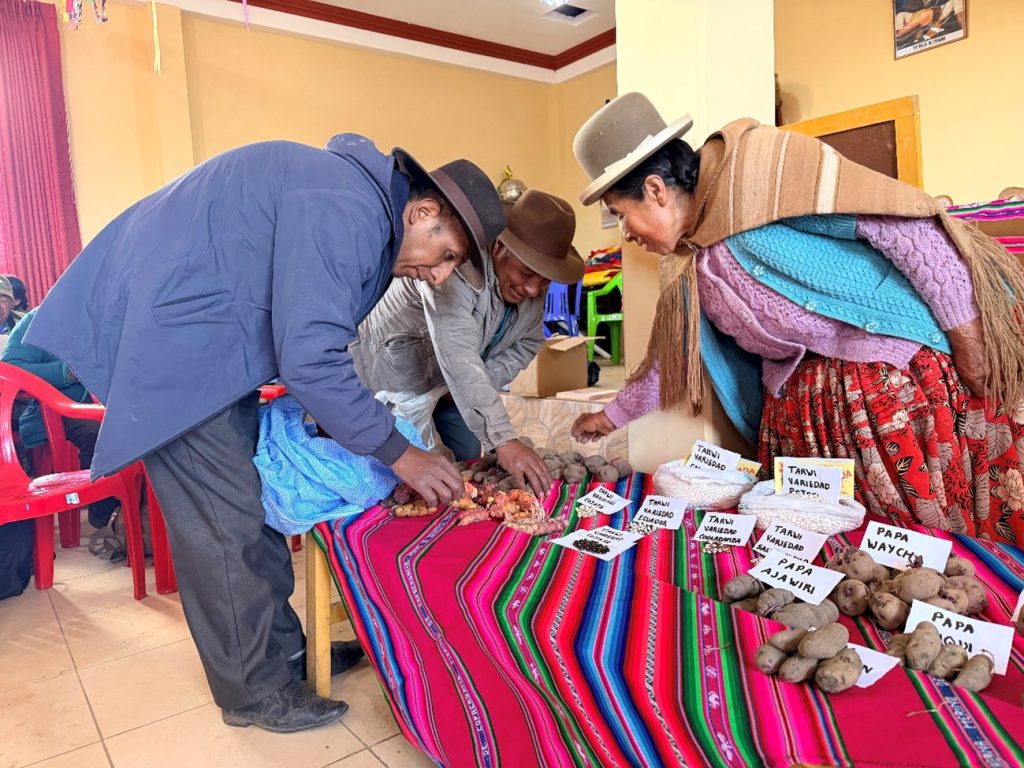
The producers prioritized crops for the Basic Food Program (EPB). In La Paz, potatoes were prioritized due to their cultural and economic importance, as well as their role in family nutrition: “Our potatoes have a unique flavor,” they proudly stated. They also expressed interest in working with broad beans, quinoa, and tarwi. In Beni, key crops for the region's food security and sovereignty, such as rice, corn, and cassava, were prioritized.
Diversification was celebrated as a key to better production: incorporating plants that attract natural enemies, avoiding agrochemicals, caring for the soil with organic fertilizers, and building agroecological farms or corridors.
Visits to plots of land in the highlands revealed excellent examples of producers who practice diversified production, including crops such as potatoes, corn, oats, wheat, broad beans, oca, vegetables, tarwi, flowers, and others. These are “champions,” as Humberto Ríos calls them, examples that should be highlighted, replicated, and reinforced with innovations suited to local conditions.
The diversity showcased by producers from tropical lands reflected the rich array of crops that characterize these communities, including rice, corn, cassava, plantains, beans, cacao, and fruits such as achachairú, mango, papaya, and watermelon, among others. The challenge lies in rescuing and revaluing local production practices by strengthening community-based agroecological systems.
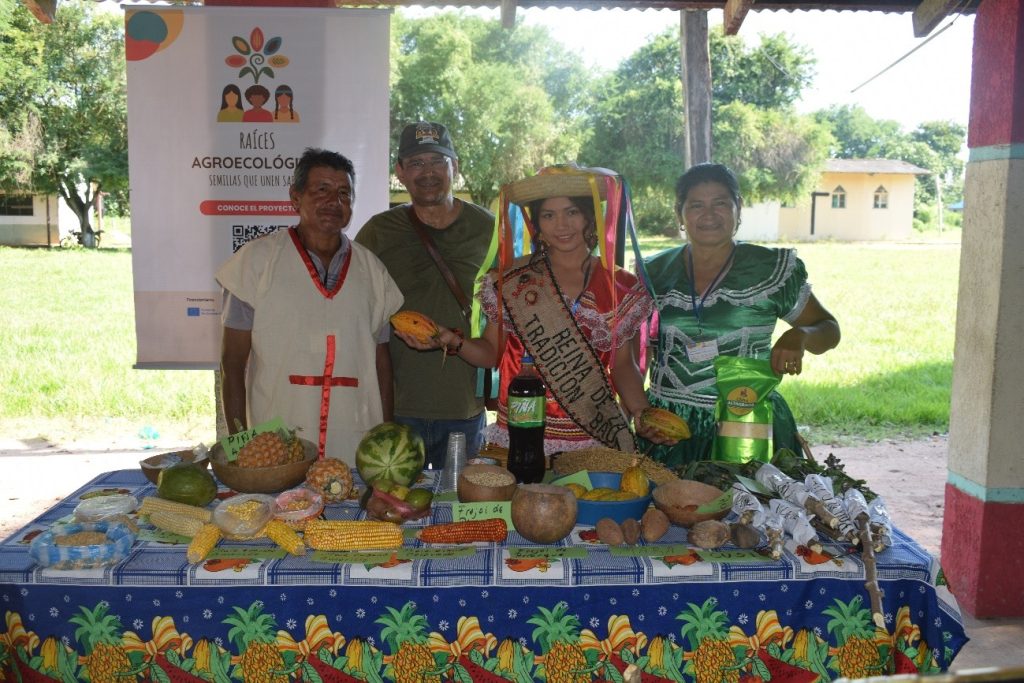
“We want to preserve our native seeds and traditional crops; they are our heritage,” they stated. They also emphasized the importance of organic farming: “not using chemicals and working with the nutrients in our soil.”
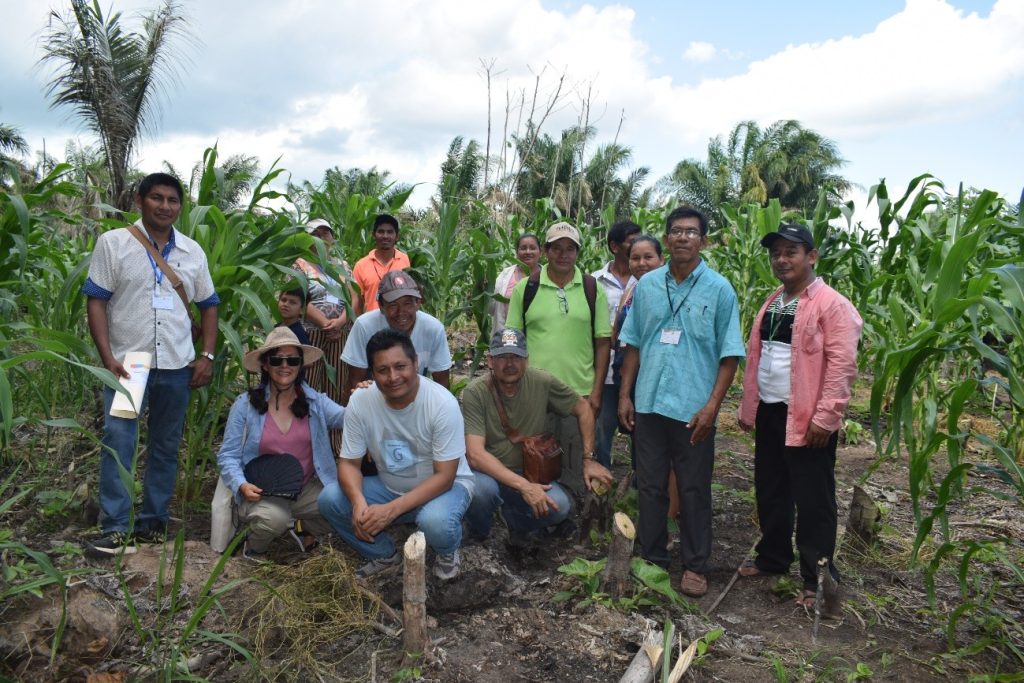
With strong participation from women and men from the communities, the meetings strengthened the exchange of knowledge and the appreciation of traditional local crops; actions like these will reinforce and promote an agroecological culture for the benefit of the people and the region.
 English
  Español
Deja una respuesta