Bolivia begins activities of the Agroecological Roots Project (GP-SAEP) with technical workshops in La Paz and Beni that strengthen family farming and indigenous knowledge.
Using participatory methodologies and a focus on the conservation of agrobiodiversity, the initiative combines science and ancestral knowledge to address the challenges of food and nutritional insecurity and climate change.
Between December 8 and 10 in the rural municipalities of the department of La Paz, and from December 12 to 14 in Beni, the activities of the trinational project “Participatory Improvement of Genetic Resources and Seed Systems for Agroecological Production” will begin. Agroecological Roots”, part of the Global Programme for Small Farmers and Sustainable Transformation of Food Systems (GP-SAEP).
The sessions will bring together municipal authorities, producers, seed guardians, local technicians and specialists in Participatory Genetic Improvement (PGI) and Evolutionary Plant Breeding (EPB) methodologies.
The initiative is funded by the European Union through the United Nations International Fund for Agricultural Development (FIDA), implemented by the Inter-American Institute for Cooperation on Agriculture (IICA) and with technical leadership from the Brazilian Agricultural Research Company (EMBRAPA) at the trinational level.
The project will directly benefit 5,000 small producers — 1,200 in Argentina, 2,600 in Brazil and 1,200 in Bolivia — with a 50% participation of women, in addition to including people from indigenous and traditional communities, and young people.
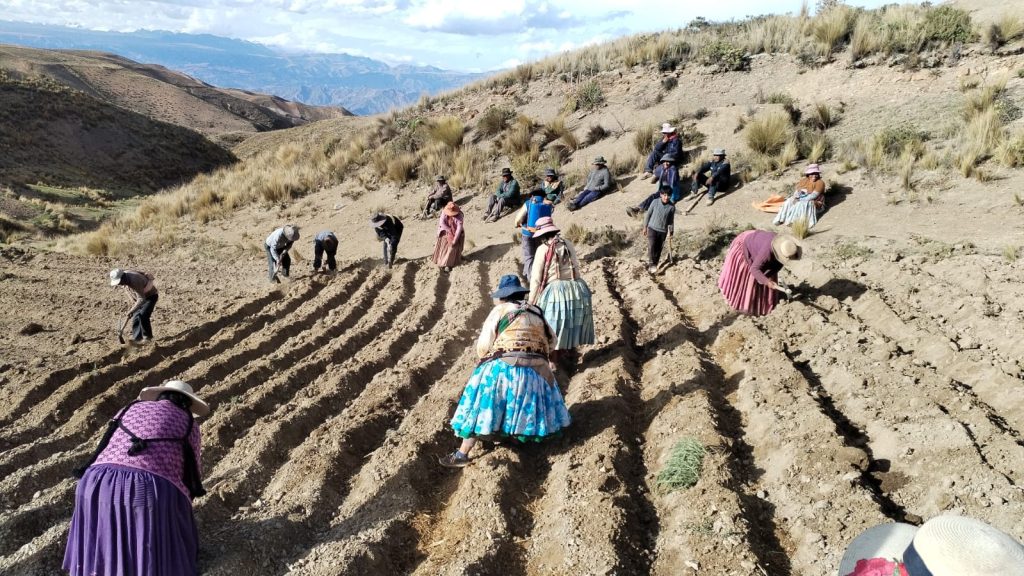
Photo. Planting of a plot of potatoes for participatory improvement, community of Wilacota
In Bolivia, implementation is the responsibility of the National Institute of Agricultural and Forestry Innovation (INIAF), together with the consortium made up of the Foundation for the Promotion and Research of Andean Products (PROINPA) and the Center for Research and Promotion of the Peasantry (CIPCA).
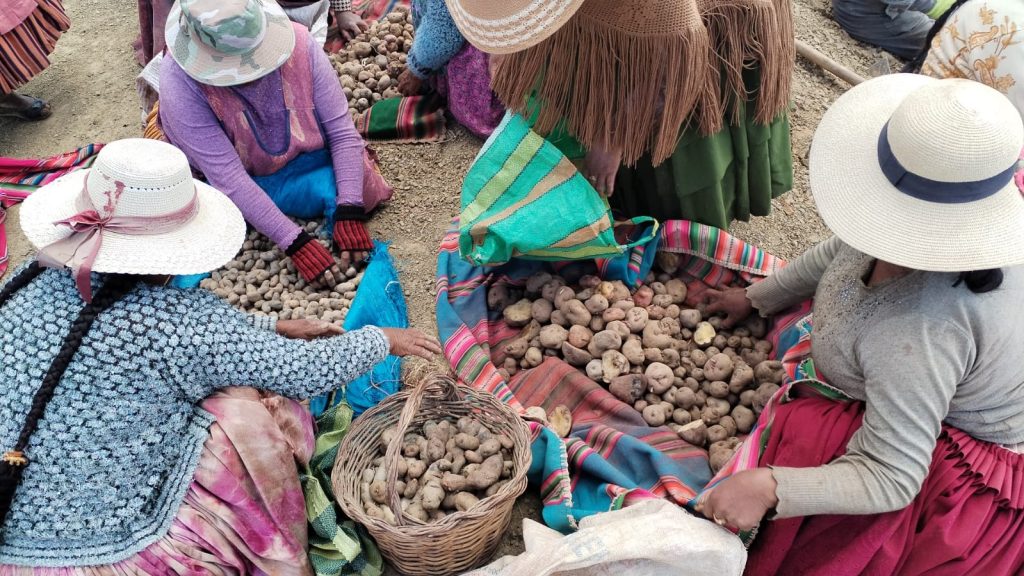
Photo. Female farmers show their seeds for planting, where they led the process.
Organized by PROINPA and CIPCA, with the support of INIAF and the Project Management Unit (UGP), introductory training workshops on participatory genetic improvement and evolutionary plant breeding will be held this December within the framework of the trinational Agroecological Roots project (GP-SAEP). The workshops will be facilitated by Humberto Ríos, an international consultant for IFAD and a leading expert in Evolutionary Plant Breeding (EPB) processes with farming communities, and guided by Altair Toledo Machado, an expert from Embrapa Cerrados, on Participatory Genetic Improvement (MGP).
Scheduled activities – In the department of La Paz, the sessions will be held in the communities of Pucarani (Achocalla), Wilacota (Mecapaca), and Cojata Pampa (Carabuco). Each day includes an official opening, a presentation of the Bolivia component of the project, theoretical training, and practical exercises on participatory genetic improvement in potato cultivation.
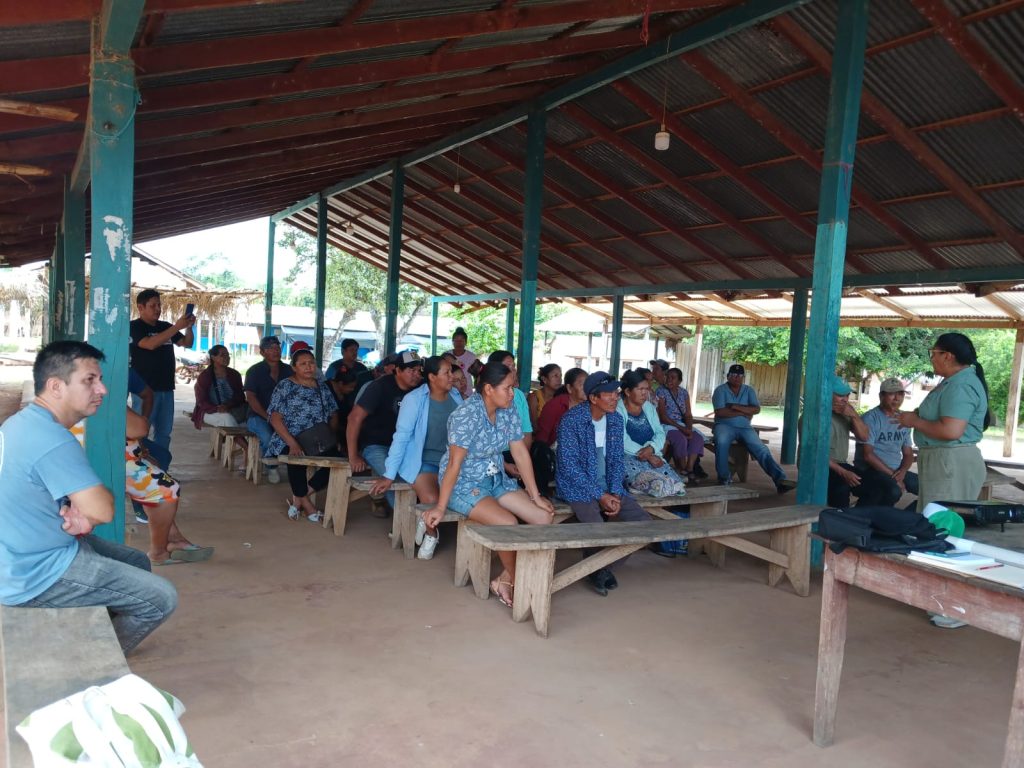
Photo. Project socialization and rapid diagnosis in the Baures municipality of Beni
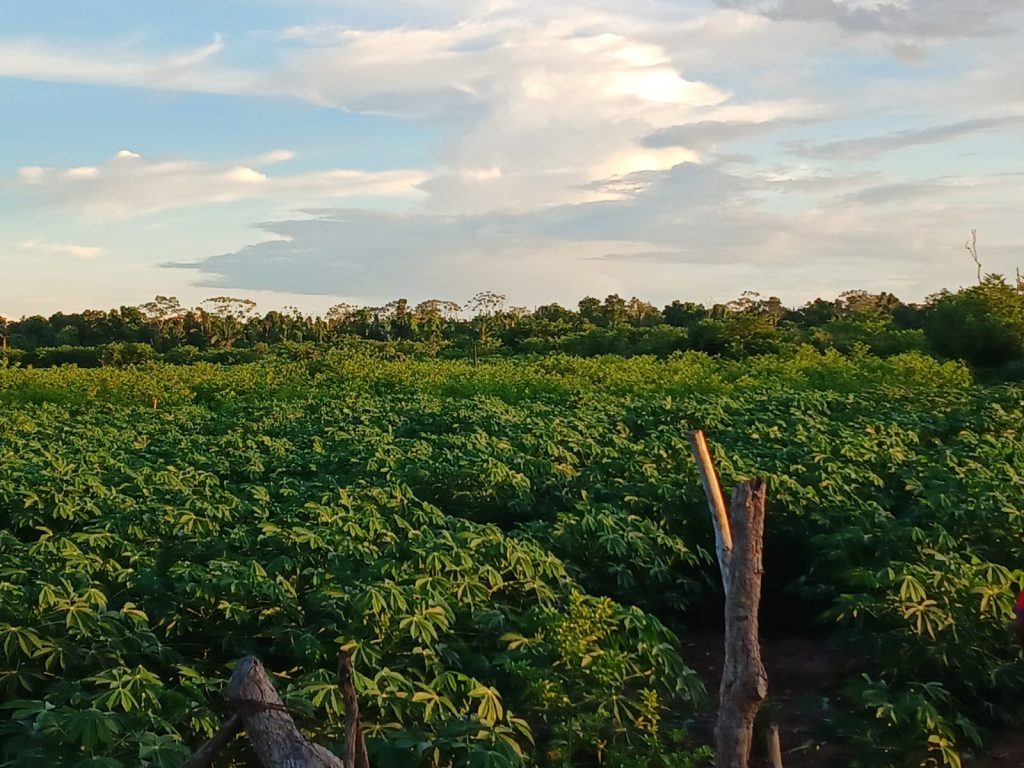
Photo. Plot of cassava, a crop selected by the producers for participatory improvement.
Subsequently, the activities will move to Beni, to communities in Baures, Jasiaquiri, Tujuré, or in San Ignacio de Moxos, Santa Rosa del Apere, and Bermeo (the selection will be based on accessibility). In these areas, theoretical workshops and visits to plots will be conducted, focusing on practical exercises with cassava, corn, and rice—key crops for the region's food security and sovereignty.
Territorial strengthening and institutional coordination – These meetings aim to consolidate spaces for exchange between science, tradition, and territory, strengthening the role of Indigenous communities and producers in building resilient agroecological systems. They also promote collaboration among municipal governments, local organizations, and technical entities to advance innovation models from and with the communities.

 English