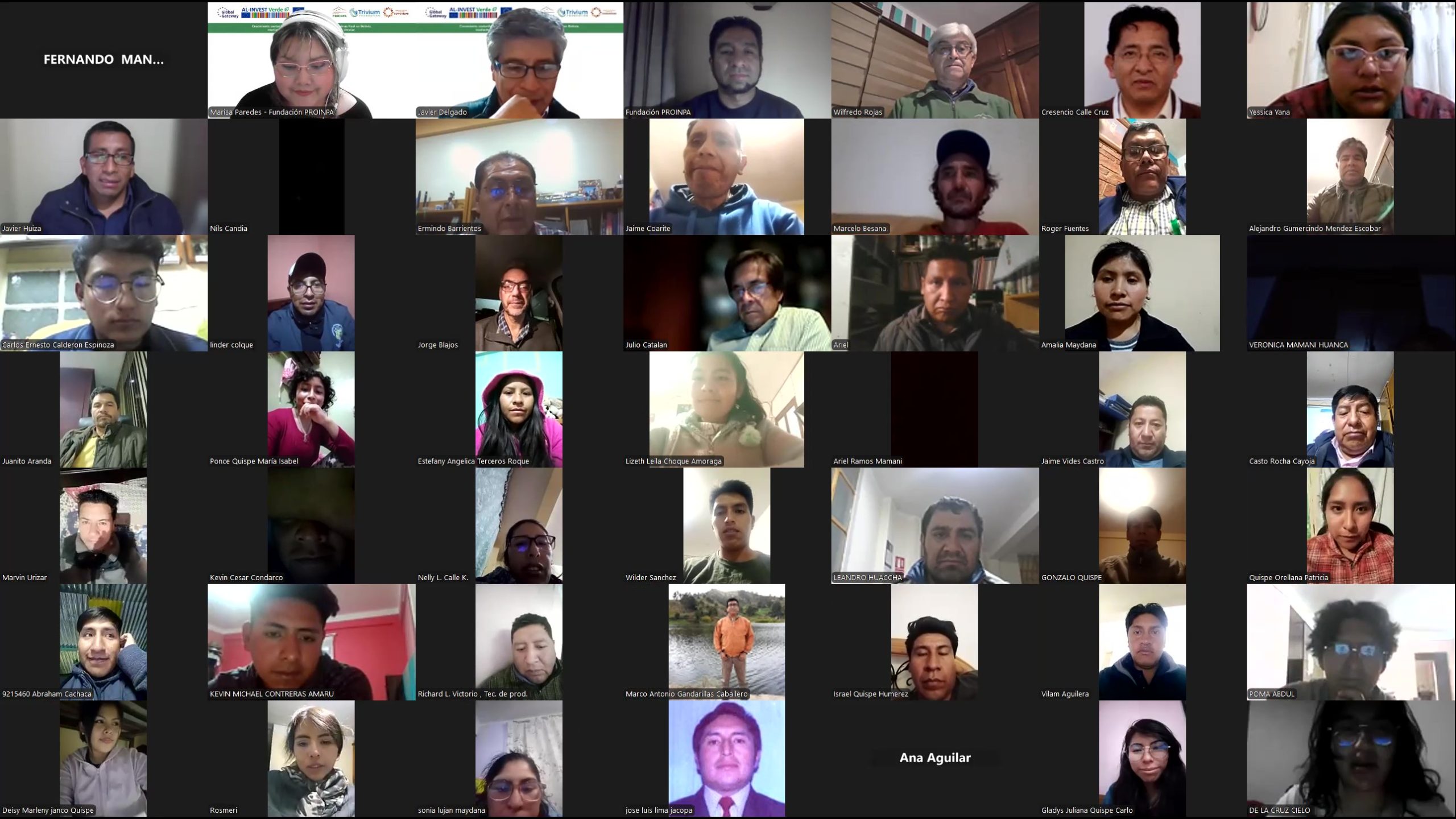
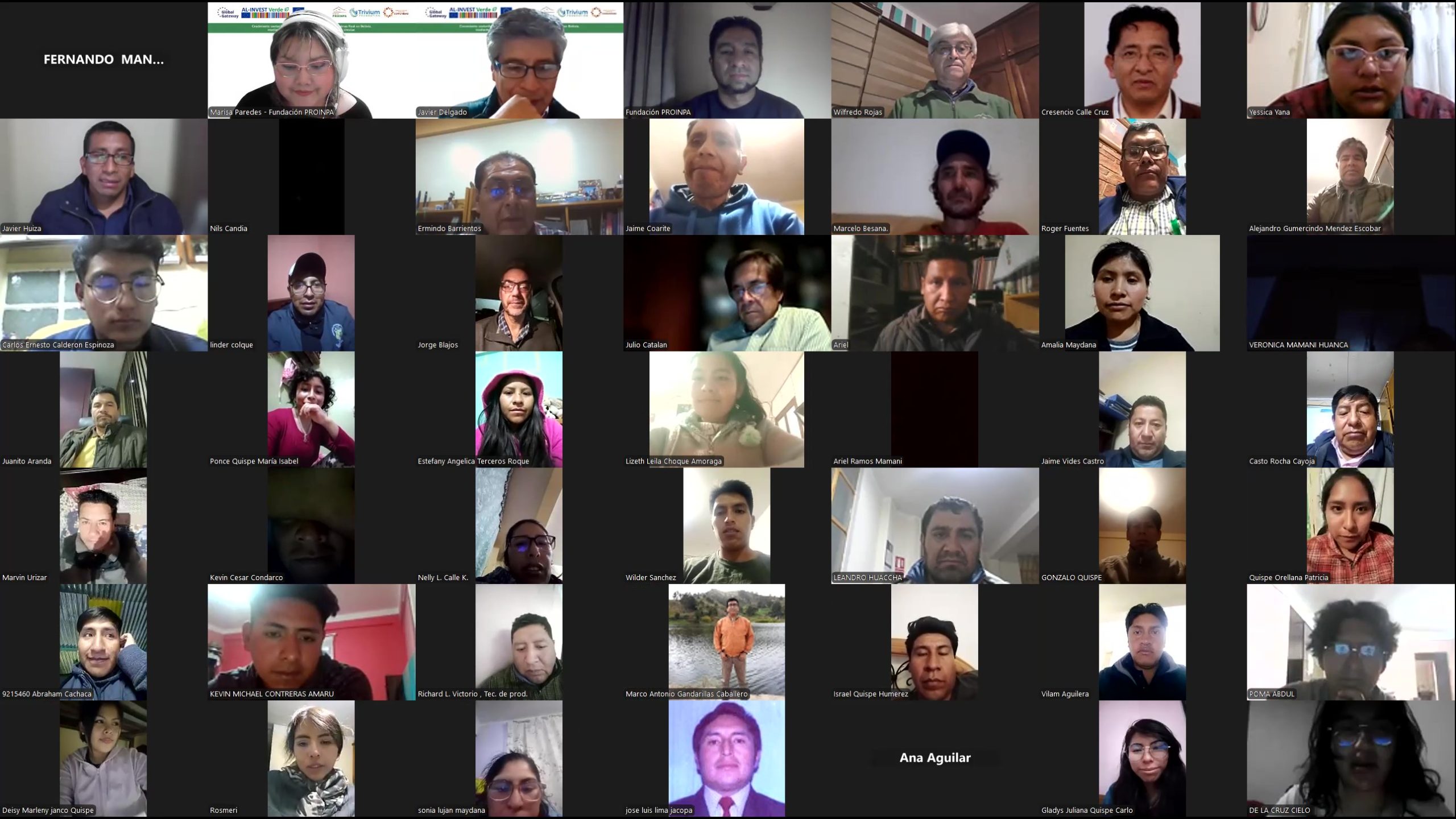
The webinar “Pathways to Regenerative Agriculture” brought together farmers, producers and MSMEs, along with industry specialists, to analyze sustainable soil management practices, cover crops and circular economy, within the framework of the AL-INVEST Verde project in Bolivia.
The webinar took place on December 3, 2025 “Pathways to Regenerative Agriculture: Soils, Cover Crops and Circular Economy”, a virtual space that brought together farmers, producers and MSMEs linked to the royal quinoa value chain in Bolivia. For two hours, the participants exchanged knowledge and reflections on sustainable practices that seek to transform the country's agricultural systems.
El evento logró una amplia convocatoria, alcanzando un total de 701 personas inscritas, un dato que demuestra la creciente atención hacia la agricultura regenerativa. La participación no solo tuvo una fuerte presencia de Bolivia, sino que también trascendió fronteras, contando con inscritos de Perú, Honduras, Brasil, México y Colombia, entre otros, lo que permitió un intercambio enriquecido por experiencias provenientes de distintos contextos agroproductivos. La participación fue activa a lo largo de toda la sesión, reflejada en un flujo constante de preguntas, comentarios y aportes enviados por el chat, que enriquecieron el intercambio y permitieron profundizar en los aspectos técnicos presentados. Este intercambio enriqueció el debate y permitió profundizar en los aspectos técnicos presentados.
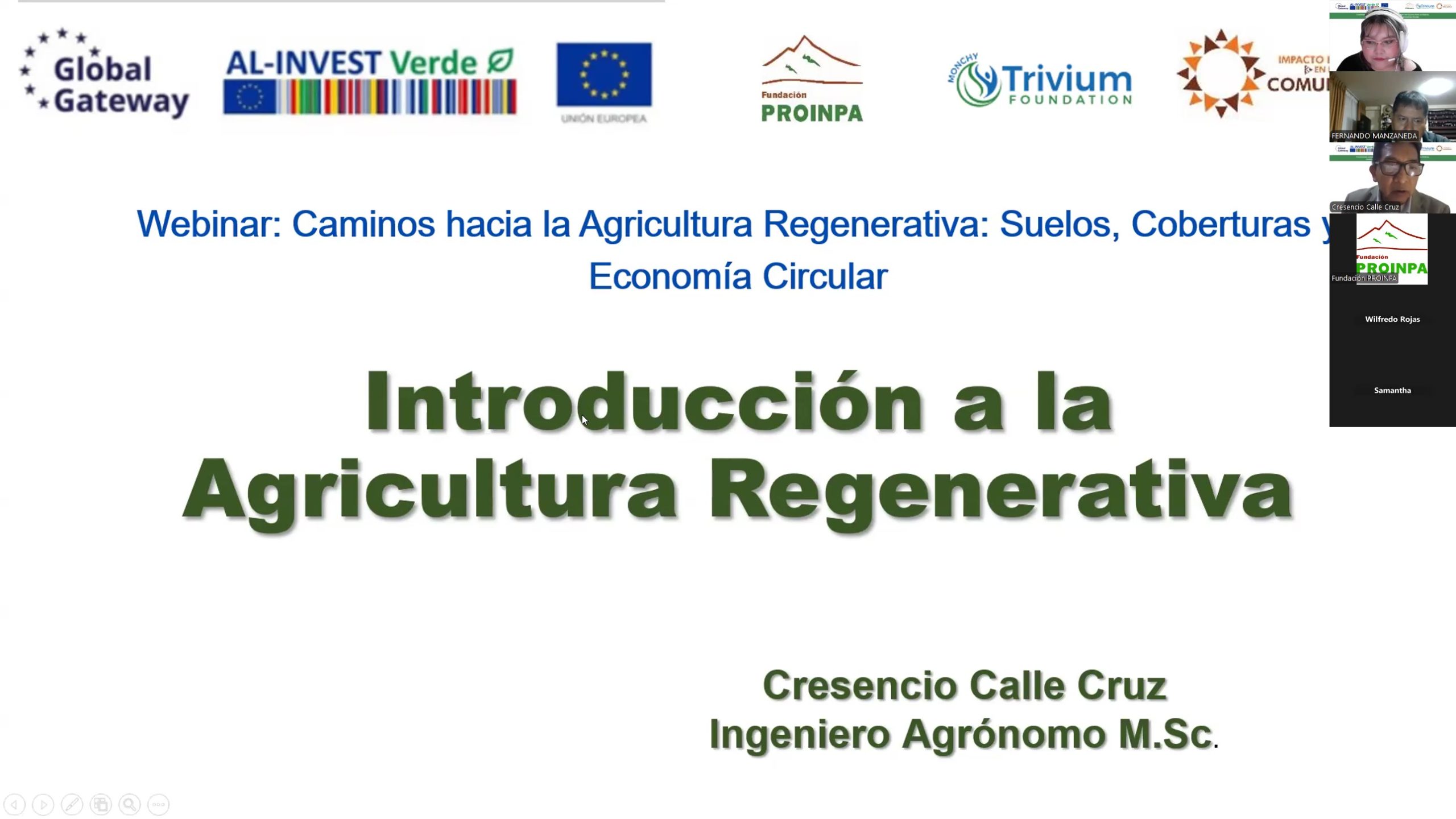
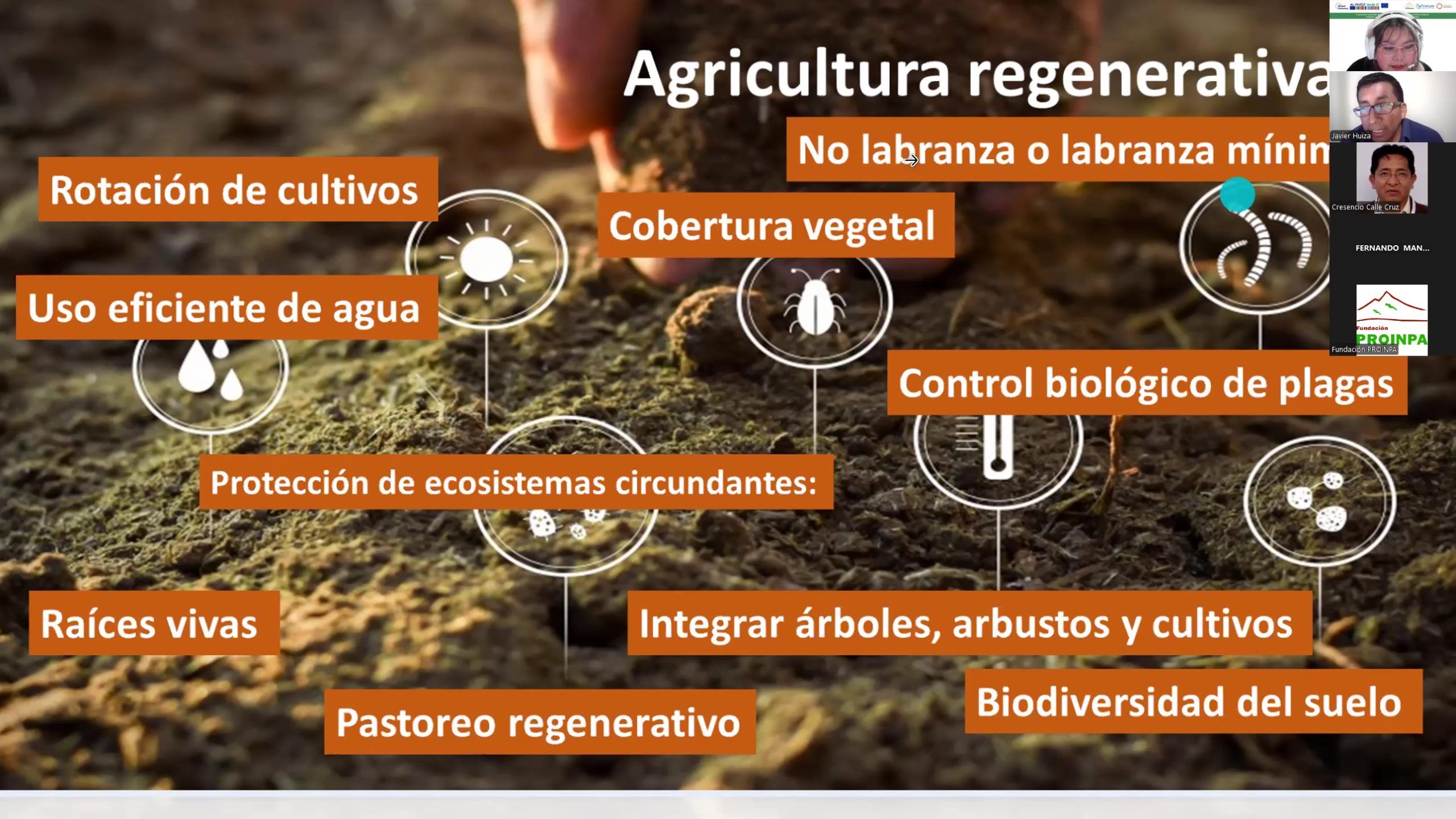
The day began with welcoming remarks from Fernando Manzaneda, The director of IIAREN–UMSA, who highlighted the need to consolidate alliances between academia, producers, and institutions to face current agricultural challenges. Subsequently, Crescencio Calle He introduced the concept of regenerative agriculture, Explaining that it is based on scientific evidence and local knowledge, and that its objective is to restore the health of the soil, water and biodiversity through practices such as reduced tillage, the use of bio-complete compost, the promotion of microorganisms and livestock integration.
In the first topic, Javier Huiza, A soil science specialist from the PROINPA Foundation delved deeper into the soil regeneration, The presentation highlighted how soil degradation affects agricultural productivity and underscored the essential role of organic matter and microorganisms. It explained that monoculture, bare soil, and the excessive use of agrochemicals degrade soil life, while crop rotations, plant cover, and biological management contribute to its recovery.


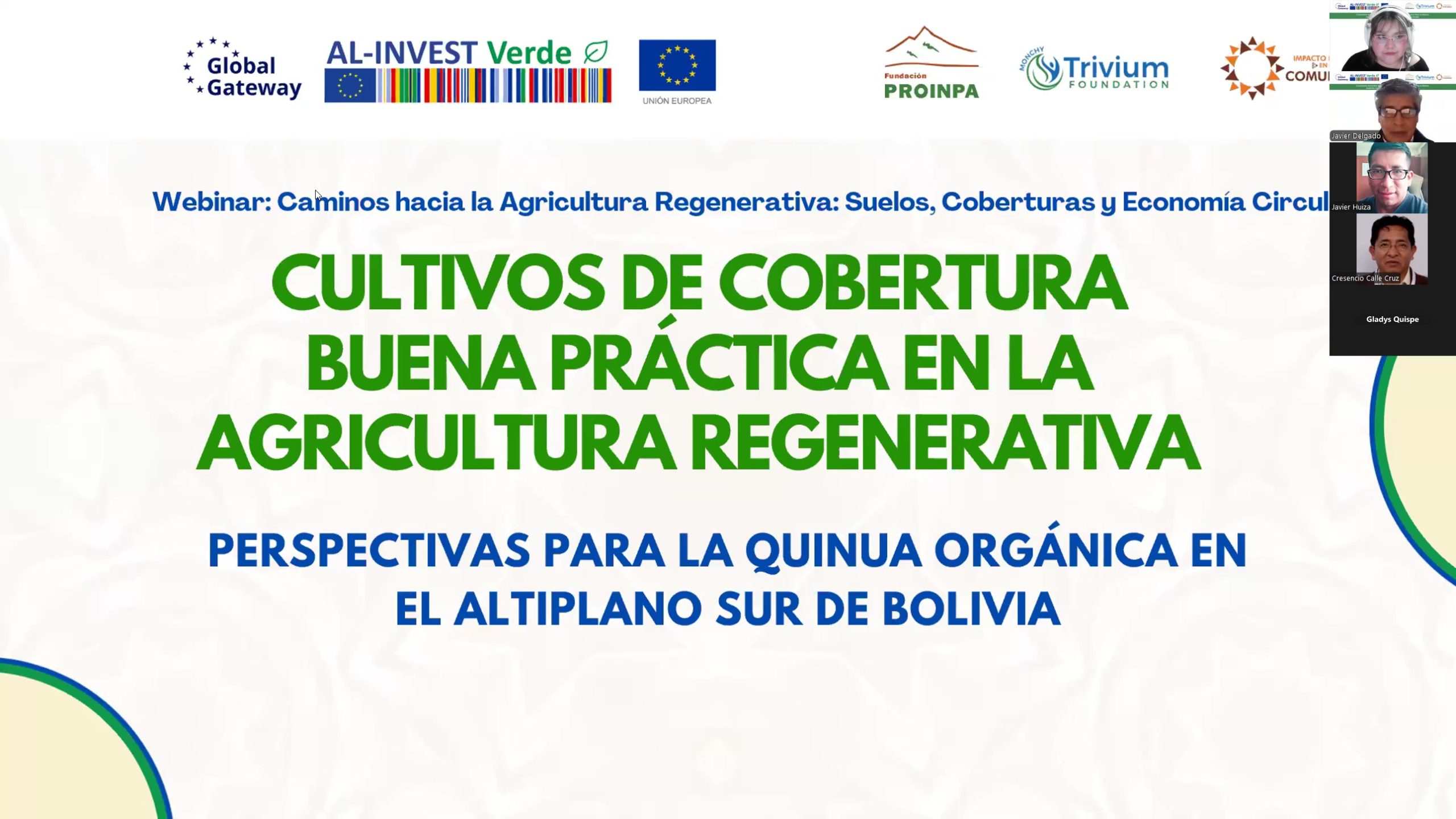
The second topic, by Javier Delgado, executive director of Positive Impact in the Community (IPC), focused on the cover crops as a fundamental tool for protecting arid soils of the southern highlands. It presented results of trials with grasses such as barley and triticale, which proved to be viable and economically accessible for reducing erosion, conserving moisture and improving organic matter, especially given the limited availability of manure.
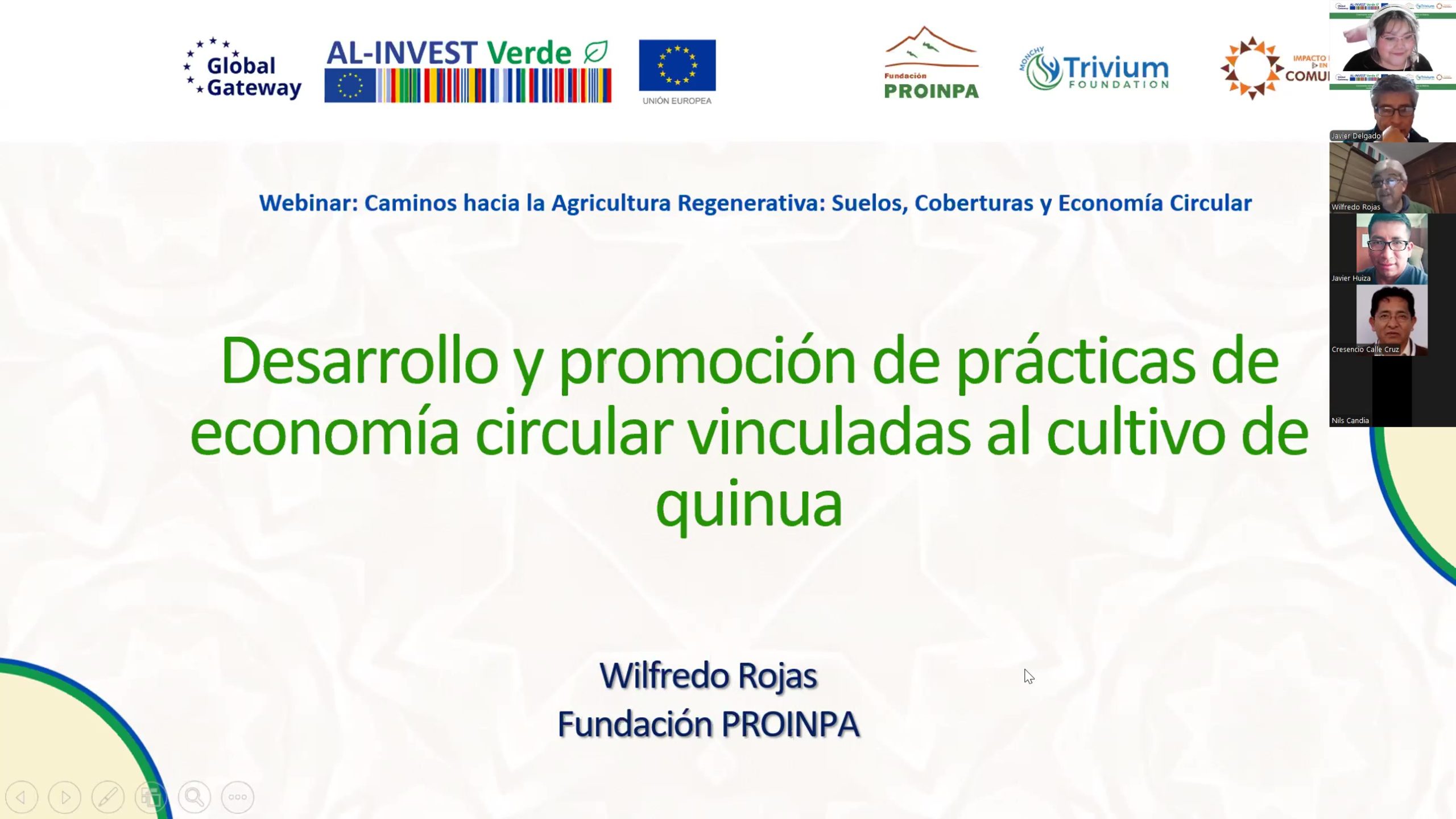
In the third topic, Wilfredo Rojas, The regional coordinator for the Altiplano region of the PROINPA Foundation explained the opportunities of the circular economy In quinoa cultivation, the use of byproducts such as the middlings, the chaff, and the husks is highlighted. It was noted that the middlings mixed with manure can reduce production costs, while the chaff and roots help protect the soil, and the husks constitute a valuable protein supplement for livestock.
The day concluded with reflections from Hermindo Barrientos Pérez, a specialist in agriculture for arid zones at UTO, highlighted the importance of deepening research, strengthening the integration between regenerative agriculture and livestock farming, and continuing to promote practices that favor the sustainability of the quinoa chain.
The webinar was held within the framework of the project AL-INVEST Green in BOLIVIA co-financed by the European Union, Positive Impact in the Community (IPC), Trivium and the PROINPA Foundation.