
The activities are part of the trinational Agroecological Roots project, which seeks to strengthen diverse and resilient food systems, promoting collaboration between science and rural communities.
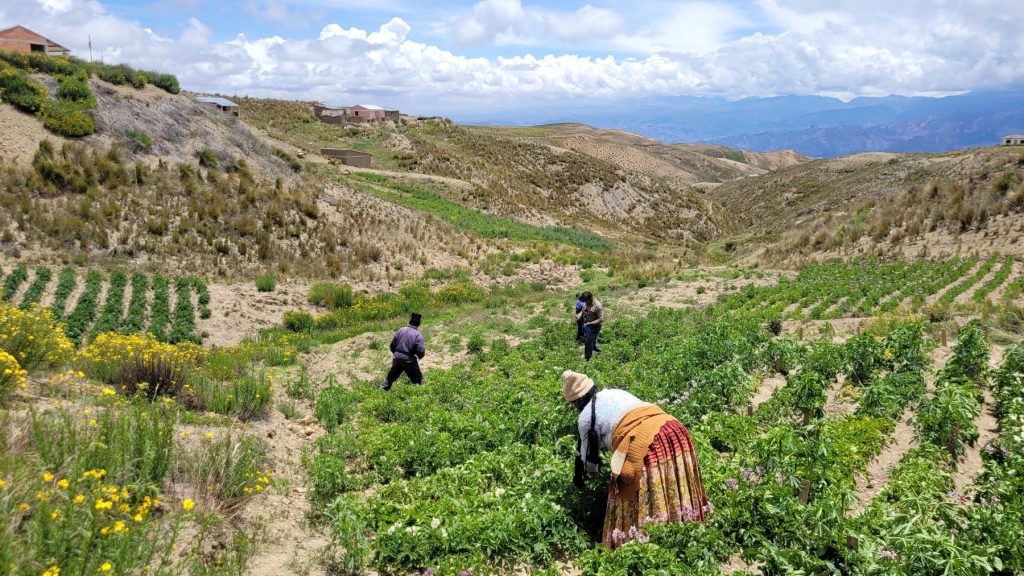
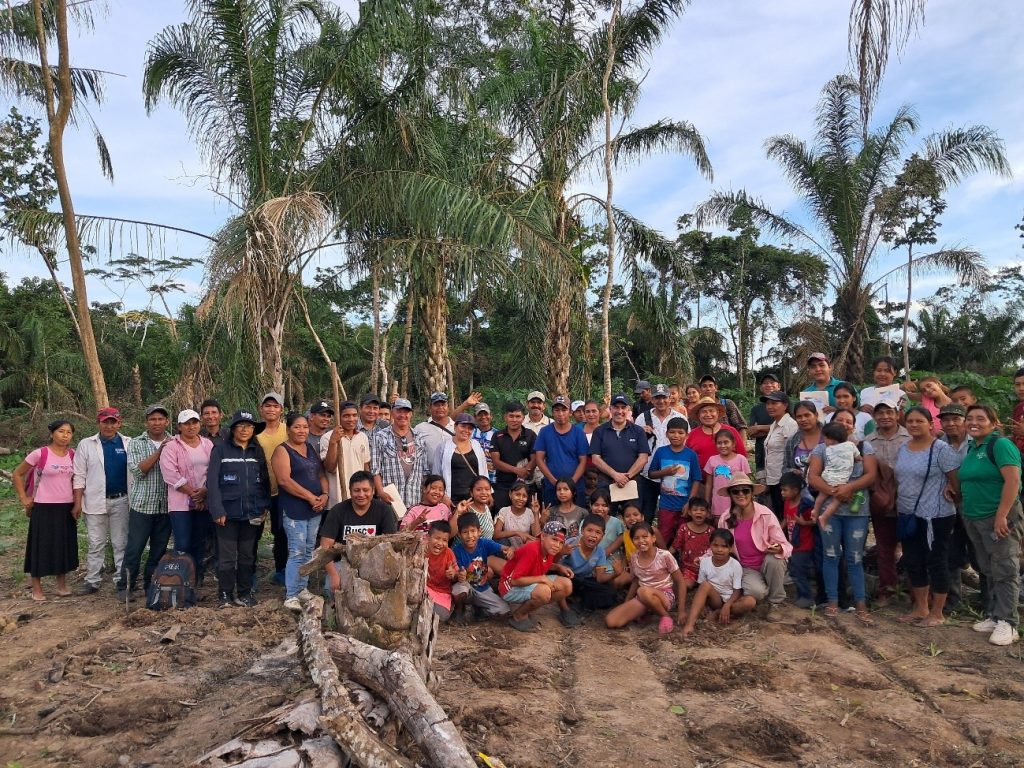
Nearly 300 producers from 23 rural communities in the departments of La Paz and Beni, Bolivia, participated in workshops and field training activities on Participatory Genetic Improvement and Evolutionary Plant Breeding, promoted by the trinational project Agroecological Roots.
The activities took place between February 23 and 25 in La Paz and between February 28 and March 4 in Beni, with the aim of strengthening the capacities of communities to select and develop relevant crop seeds adapted to the challenges of climate change, promoting resilient agricultural systems in accordance with the needs of the territories.
The initiative is part of the project “Participatory Improvement of Genetic Resources and Seed Systems for Agroecological Production – Agroecological Roots”, which is part of the Global Programme for Small Agricultural Producers and Sustainable Transformation of Food Systems (GP-SAEP).
The project is financed by supplementary funds from the International Fund for Agricultural Development (FIDA) from the European Union, implemented by the Inter-American Institute for Cooperation on Agriculture (IICA) and implementing partners at the national level and has technical leadership from the Brazilian Agricultural Research Company (EMBRAPA) at the trinational level.
In Bolivia, the project will directly benefit 1,200 people, with at least 50% of women participating, in addition to including indigenous communities, traditional populations, and youth. Implementation in the country is being handled by the National Institute of Agricultural and Forestry Innovation (INIAF), together with the consortium made up of the Foundation PROINPA and the Center for Research and Promotion of the Peasantry (CIPCA).
Communities in La Paz are experiencing participatory potato improvement
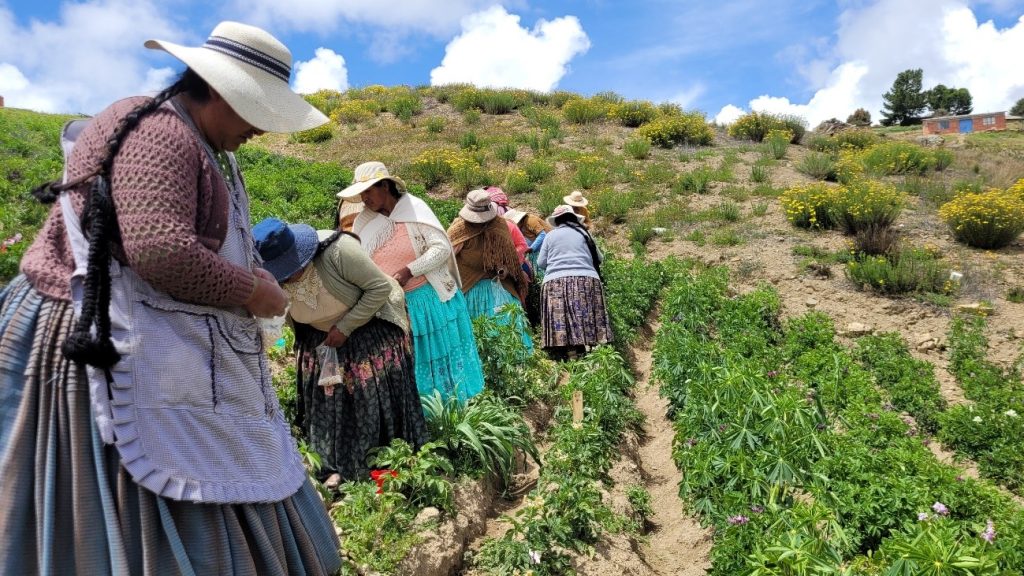
In the department of La Paz, 141 people participated in the activity, 86 of whom were women (61%), from nine rural communities in the municipalities of Mecapaca, Carabuco, Puerto Pérez, and Achocalla. During the workshops, farmers evaluated potato plots, exchanged knowledge about variety selection, and initiated evolutionary plant breeding processes conducted within their own communities.
In the field, the interest of the farming families was clear: to select and develop potato varieties adapted to the climatic conditions. As farmer Lupe Carrillo Gamboa, from the community of Uypaca, explained:
“We planted 36 varieties. Now we are choosing the ones that seem best to us, for their deep green foliage and large leaves. We hope they will be resilient and produce a good yield,” he says.
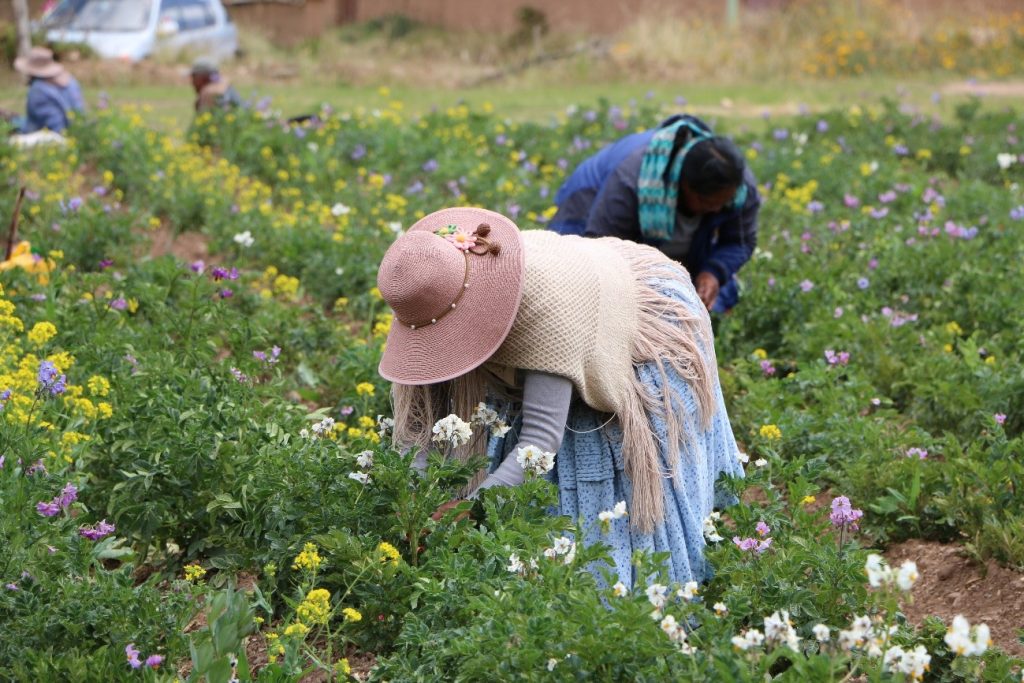
One of the most significant moments occurred during the evaluation of plots affected by extreme weather conditions. Upon digging the soil, farmers found surviving tubers, a valuable discovery for identifying varieties with greater tolerance to drought and frost. This finding not only provided key information for the breeding process but also renewed the hope of the farming families.
The workshops also allowed for the outlining of the first organized community groups for the genetic improvement of seeds, strengthening local autonomy in the management of agrobiodiversity.
In the Beni tropics, indigenous communities are leading the participatory improvement of corn and cassava.
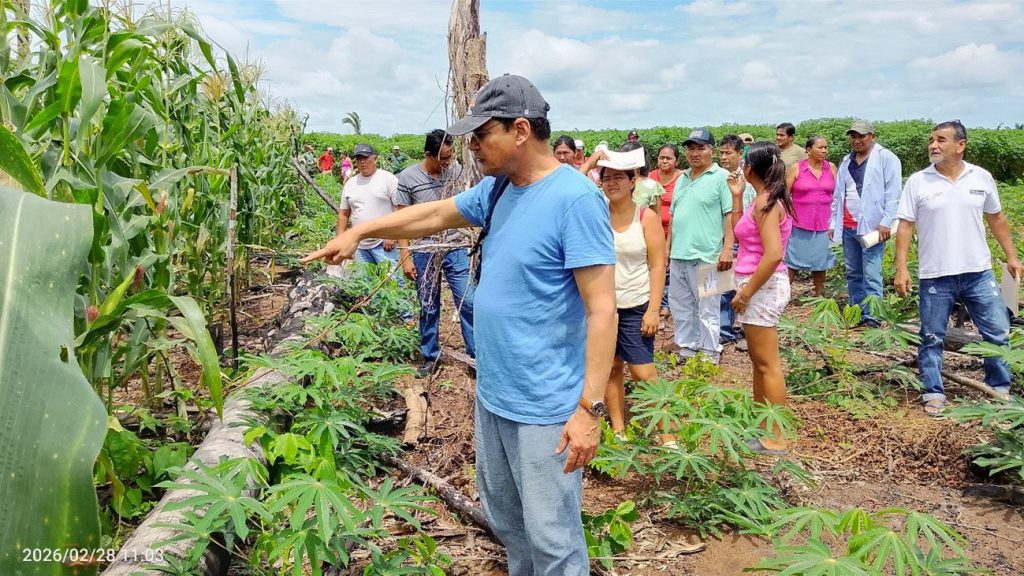
In the department of Beni, the activities brought together 158 producers from 14 indigenous communities in the municipalities of Baures, Magdalena, San Ignacio de Moxos and the Autonomous Indigenous Government of the Multiethnic Indigenous Territory (GIA TIM), who participated in processes of evaluating corn plots, selecting materials and experimenting with crops adapted to the conditions of the Beni tropics, such as cassava.
For Ignacia Tamo, territorial operator of natural resources and productive development at GIA TIM, the training sessions represent a concrete opportunity to strengthen local production.
“We didn’t know how to use the (real) cassava seed. With this training, we learned a new way to produce, have more varieties, and improve our production. Now we can take this knowledge to our communities and expand our work with other varieties of cassava, corn, and rice,” he says.
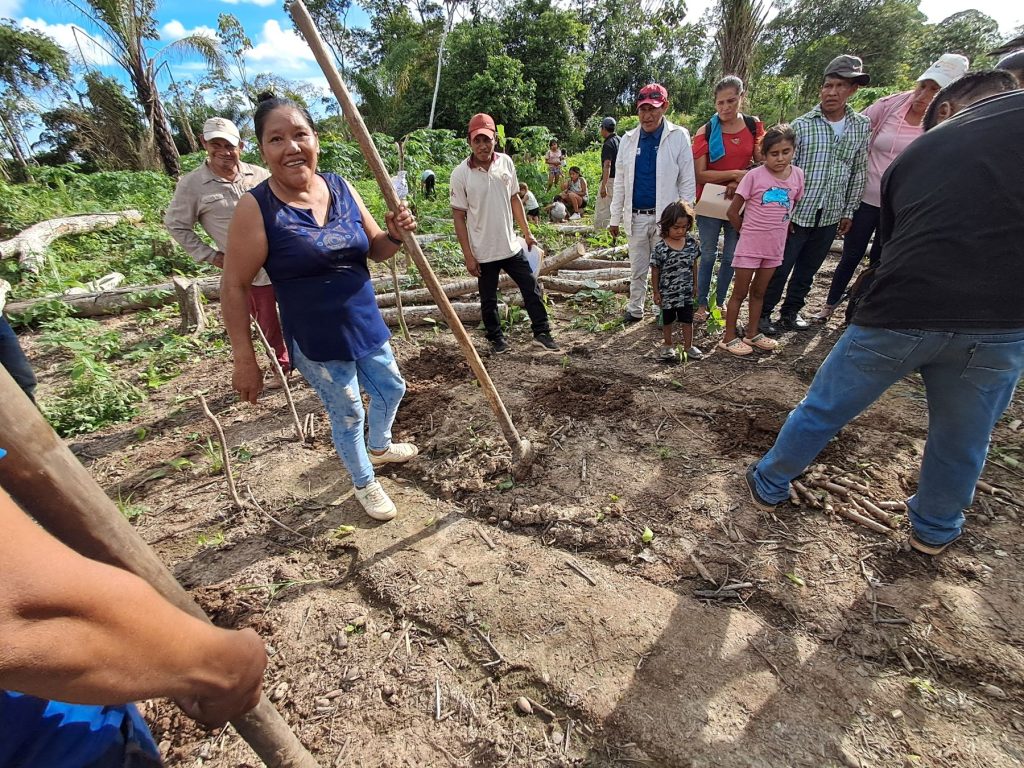
The activities were facilitated by IFAD's Evolutionary Plant Breeding Specialist, Humberto Ríos, with the support of national technical teams responsible for the implementation of the project at the local level, strengthening the articulation between institutions, communities and rural development projects.
For participating communities, improving seeds is a key strategy for addressing climate variability, ensuring food production, and maintaining the diversity of crops adapted to each territory. Through participatory breeding methodologies, producers not only evaluate existing varieties but also develop new seed populations capable of adapting to changing conditions, strengthening food sovereignty and the resilience of agricultural systems.
Text: Acsa Macena
Collaboration: Ximena Cadima
Photos: PROINPA and CIPCA
 English
  Español
Deja una respuesta